
Choosing an AI SEO and GEO agency requires more than comparing proposals or chasing the newest marketing term. The right partner should connect technical SEO, useful content, prompt tracking, authority building, and measurable reporting into one strategy. A credible agency will explain its process, set realistic expectations, and show how its work helps search engines and AI platforms understand why your business deserves to be recommended.
What Should an AI Search and GEO Agency Actually Do?
A qualified agency should make your business easier to find, understand, trust, and recommend across traditional search and generative platforms. That requires a technically sound website, customer research, useful content, clear brand information, third-party authority, prompt monitoring, and regular measurement.
Traditional SEO helps search engines crawl, index, and rank webpages. Generative engine optimization improves how clearly AI systems can retrieve, interpret, cite, or recommend that information. They overlap because AI search still depends on accessible pages, clear entities, useful answers, and trustworthy evidence.
Google’s official guide to optimizing for generative AI features says the same core practices that support conventional Search also support visibility in AI Overviews and AI Mode. Businesses still need crawlable pages, helpful content, strong internal links, descriptive text, and accurate information.
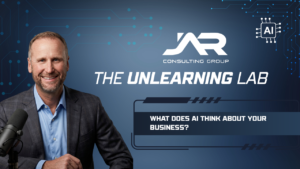
On The Unlearning Lab, JAR Consulting Group founder Kevin Wosmansky called the two disciplines “two pieces of the same puzzle.” Businesses lose opportunities when they pursue AI visibility without a solid technical foundation or rank in search without enough authority to earn recommendations.
What Questions Should You Ask Before Hiring an Agency?
Before signing, ask the agency to explain its methodology, measurements, platform coverage, deliverables, and expectations. Clear answers reveal whether it has a repeatable strategy or simply renamed an old SEO package.
Which AI Platforms Will You Track?
Ask whether the agency evaluates visibility across ChatGPT, Gemini, Claude, Perplexity, and Google’s AI search experiences. Results can vary by platform, prompt wording, location, and timing. One isolated answer does not prove visibility.
Wosmansky gave a useful example in the podcast. Tracking 25 prompts across four platforms creates 100 responses to review. That workload explains why credible monitoring needs a system, consistent prompts, repeated checks, and human interpretation. It also shows why a single screenshot is not meaningful reporting.
How Will You Measure Progress?
The agency should look beyond rankings. Useful measurements include qualified traffic, conversions, indexed pages, brand mentions, citations, prompt visibility, sentiment, and competitor share of voice. No single metric tells the whole story.
Ask how often reporting is delivered and whether it includes clear recommendations. A long list of numbers is not useful unless the agency explains what changed, why it matters, and what should happen next.
What Services Should Be Included in a Full Engagement?
A full engagement should include technical website work, prompt research, content strategy, authority development, competitive analysis, monitoring, and reporting. Every service should support a clear outcome. Avoid vague deliverables such as “AI optimization” without explaining what will change.
Technical Website Optimization
The agency should review crawlability, indexing, site structure, speed, metadata, redirects, internal links, and server-side accessibility. Important content should not be hidden behind scripts, tabs, pop-ups, or gated experiences that make it difficult for search engines and AI systems to retrieve.
Technical SEO may not be the most exciting part of the engagement, but it supports everything that follows. Publishing strong content on a website that cannot be crawled properly limits the value of the work.
Content and Entity Strategy
Content should clearly state who the business is, where it operates, what it offers, and why it is qualified. Names, locations, credentials, pricing, and brand terminology should remain consistent across the website and other trusted platforms.
Google warns that generating large volumes of pages without adding value can violate its spam policies. Its guidance on generative AI content encourages businesses to use AI as a tool while maintaining accuracy, originality, and usefulness. The goal is not to publish more words. It is to publish better answers.
A strong content strategy should be based on real customer questions. It should also draw from the experience of business owners, employees, and subject-matter experts. That firsthand knowledge helps a company publish information competitors cannot easily duplicate.
Authority and Citation Building
An agency should create expert-led assets and earn legitimate third-party mentions through public relations, professional associations, podcasts, interviews, case studies, industry publications, and community involvement.
Publishing content on the company website is only one part of authority building. AI systems may encounter information about the business across many sources. Consistent mentions from independent platforms help support claims about the company’s services, experience, location, and reputation.
Website Accessibility and Content Visibility
Important information should be visible in the main page content and written in clear text. Search engines and AI systems cannot reliably use information that appears only inside images, videos, interactive tools, or hidden page elements.
A qualified agency should check whether service details, pricing guidance, qualifications, locations, and common customer questions are available in readable text. Video and podcast content should be supported by transcripts, articles, summaries, or other accessible resources.
Making content easier for machines to retrieve also makes it easier for customers to understand. Clear pages usually serve both audiences better.
Reporting and Recommendations
Reports should explain what changed, what improved, what failed, and what happens next. Business owners need decisions, not just charts.
A useful report may show which prompts gained visibility, which competitors are cited, which pages attracted qualified traffic, and which topics need stronger evidence. The agency should then turn that information into the next month’s priorities.
How Much Should a Legitimate Strategy Cost?
A legitimate strategy costs more than a basic SEO subscription because it combines technical work, research, content, authority building, monitoring, and analysis. Price should reflect the market, competition, website condition, content needs, and goals. Cheap work becomes expensive when it produces no durable assets or measurable progress.
In the podcast, Wosmansky said most businesses should expect to invest roughly $2,500 to $5,000 per month for a full-service program covering website work, content, authority development, hosting, interviews, and related execution. He also noted that more aggressive programs can cost considerably more. These figures reflect JAR Consulting Group’s experience and should be treated as planning guidance, not a universal industry rate.
When comparing proposals, confirm who performs the work, which website changes are included, how many platforms and prompts are monitored, what content will be created, and who owns the finished assets. A cheap automated report is not comparable to hands-on technical work, expert interviews, original resources, and authority development.
The lowest proposal may also exclude services the business later has to buy elsewhere. Compare the full scope, not just the monthly fee.
How Long Should It Take to See Results?
Businesses should expect foundational progress during the first 90 days, not guaranteed dominance. Early work includes technical repairs, brand clarification, customer research, prompt mapping, content planning, baseline tracking, and new assets. Recommendation patterns take longer because authority, indexing, citations, and external recognition develop over time.
Existing reputation matters. A company with strong content, media coverage, reviews, links, and consistent brand information may move faster than a business with little third-party validation.
JAR Consulting Group experienced this directly after changing the public-facing brand from Iowa Digital. Wosmansky explained that changing the domain, Google Business Profile, citations, and broader brand footprint created an expected setback. After roughly six to seven months of focused work, he reported that JAR had reached the top three recommendations for a target ChatGPT query he monitored. That is a company-specific example, not a guaranteed timeline, but it illustrates why consistency matters.
The Princeton-led GEO study found visibility gains of up to 40 percent under defined experimental conditions, with results varying by domain. That is not a guarantee of a 40 percent lift in organic recommendations. Responsible agencies explain that distinction.
What Red Flags Suggest an Agency May Waste Your Budget?
The biggest red flags are guaranteed recommendations, secret tricks, unclear deliverables, weak reporting, and no connection to technical SEO. GEO is still developing, and no agency controls the models. A trustworthy partner can improve your digital evidence and measure visibility, but it cannot force every platform to cite your business for every prompt.
They Promise Overnight Results
Guaranteed AI recommendations within a fixed period are not credible. Platforms change, answers vary, and competitive markets require sustained work.
Agencies should provide milestones for work completed and progress measured. They should not guarantee a ranking or recommendation that depends on a third-party system.
They Sell “Secret” Optimization Tricks
Wosmansky compared these claims to old black-hat SEO. Lasting visibility comes from helping systems understand the business and find independent evidence of its credibility.
A legitimate agency should be able to explain its approach without hiding behind proprietary language. Its internal tools may be private, but its overall process should make sense.
They Cannot Explain Their Deliverables
“GEO management” is not a deliverable. A proposal should identify the research, technical changes, content, outreach, monitoring, and reporting included.
Watch for packages that promise a large number of automated articles without interviews, research, fact-checking, or a plan for promoting the content.
They Ignore Business Outcomes
Ask how the strategy connects visibility to leads, sales, bookings, or another business outcome. More mentions are helpful only when they support the company’s broader goals.
A good agency should understand which services are most profitable, which customers the business wants, and which locations matter. That context guides the prompts, content, and authority work.
Why Does Authority Matter More Than Publishing More Content?
Authority matters because AI systems synthesize multiple sources and look for evidence supporting a recommendation. A business cannot build credibility by praising itself. It needs useful first-party content and confirmation from reputable third parties.
The foundational GEO paper found that adding citations, quotations, and statistics could improve visibility under its test conditions. These elements work because they make claims easier to verify and passages easier to use. They should never be invented or added only for appearance.
Expert interviews turn internal knowledge into indexable assets. One conversation can support a podcast, video, transcript, article, FAQs, clips, and sales resources. JAR Consulting Group treats interviews and podcasting as authority building, not disconnected production.
Google also emphasizes unique, satisfying content created for people, with important information available in text and claims supported by evidence. AI visibility starts with being genuinely useful.
Publishing fewer authoritative resources is often more valuable than producing large volumes of shallow content. Each page should answer a real question, add original experience, and give the reader information they can act on.
How Should You Compare Agencies Before Making a Decision?
Compare agencies by methodology, ownership, accountability, and fit rather than price alone. The right partner should understand your market, involve your experts, produce assets you own, and admit uncertainty instead of pretending the field is predictable.
Request a written scope that answers five questions:
- What will be completed during the first 90 days?
- Which platforms, prompts, competitors, and locations will be tracked?
- What content and authority assets will be created?
- Which metrics will determine progress?
- What responsibilities belong to the agency and the client?
Business owners also need to participate. An agency cannot manufacture authentic expertise without access to the people who understand the company, customers, pricing, objections, and work.
JAR Consulting Group’s approach is built around one unified strategy rather than separate SEO, content, podcast, and generative visibility packages. That structure is a useful benchmark when evaluating an AI SEO and GEO agency: every activity should help your business become a clearer, better-supported, and more trusted answer online.
Watch the Full Podcast Episode
Watch the full episode of The Unlearning Lab on YouTube to hear Mike Downer and Kevin Wosmansky break down what businesses should expect from AI search marketing, including realistic budgets, first-quarter priorities, prompt tracking, authority development, agency red flags, and the time commitment required from business owners. Their conversation offers a direct, practical look at how JAR Consulting Group helps companies build visibility across Google and leading AI platforms without relying on shortcuts or empty promises.
Frequently Asked Questions
Can a Small Business Compete With National Brands in AI Search?
Yes. A small business can compete by answering specific local or industry questions better, demonstrating real expertise, earning relevant third-party mentions, and keeping its brand information consistent. Narrow authority is often more achievable than trying to become the universal answer for a broad topic.
Should a Business Stop Investing in Traditional SEO?
No. Traditional SEO remains the technical and content foundation for AI visibility. Search engines and generative systems still need accessible pages, clear information, internal links, and trustworthy evidence. Replacing SEO with GEO would weaken the same assets AI systems often rely on.
Can an Agency Guarantee That ChatGPT Will Recommend a Business?
No credible agency can guarantee a specific recommendation. AI responses may change based on the prompt, model, location, available sources, and platform updates. Agencies can improve the evidence surrounding a brand and track outcomes, but they do not control the final answer.
Does Podcasting Help With Generative Search Visibility?
Podcasting can help when each episode becomes accessible assets such as a transcript, article, clips, speaker information, and reputable third-party distribution. The recording alone has limited value when its key insights are not available in readable text.
How Often Should Prompt Visibility Be Checked?
The right frequency depends on the market and number of prompts. Monthly checks may work for a small local campaign, while competitive programs may need weekly or more frequent monitoring. Repeated measurement matters because one response can be an outlier.
Does a Business Need a New Website Before Starting GEO?
Not always. An agency should first audit the existing website to identify technical, structural, and content problems. Some websites need targeted improvements, while others may require a larger rebuild because important pages are inaccessible, outdated, slow, or poorly organized.
Who Should Participate in an AI Visibility Strategy?
The owner, leadership team, sales staff, and subject-matter experts should contribute. They understand the customer questions, objections, services, pricing, and experiences that make the company distinctive. The agency’s job is to turn that knowledge into accurate, useful, and discoverable content.