1 min read

AI Brand Citations: The New Way Businesses Get Found in 2026

Key Takeaways

  • AI search changes how businesses gain visibility
  • Brand citations act as authority signals
  • AI answers reduce reliance on clicks
  • Consistency improves citation stability
  • Citation drift causes fluctuating visibility
  • Zero-click discovery increases brand awareness
  • Authority influences AI recommendations
  • Businesses must focus on expertise and consistency

Search behavior is shifting. People ask AI tools for answers instead of scrolling through pages of links. Traditional SEO still matters, but visibility now depends on whether AI systems reference your brand as a trusted source. This shift toward AI brand citations changes how companies build credibility, earn trust, and appear in recommendations.

Kevin Wosmansky and Mike Downer explain how this shift affects marketing, search visibility, and brand authority. Businesses that adapt early gain more consistent exposure. Those that rely only on rankings risk losing visibility as AI summaries replace search results.

What Are Brand Citations?

Brand citations happen when an AI system or trusted website references a business as a source. These references do not require links. Instead, the AI includes the brand name in a summary, recommendation, or source list. This signals trust.

Traditional SEO relied on backlinks. Websites linked to each other to pass authority. Search engines measured link quality and quantity. Higher quality links increased rankings. That model still exists, but AI search evaluates information differently.

AI systems review content across multiple sources. They identify experts, compare consistency, and reference brands that appear reliable. A citation becomes a signal of authority. The more often a brand appears in trusted contexts, the more likely AI systems reference it again.

This approach rewards expertise. Businesses earn visibility by publishing helpful information, answering questions, and maintaining consistency across platforms. Link building alone no longer guarantees exposure.

Why Brand Citations Matter

AI tools now generate answers directly. Users receive summaries without clicking links. When a brand appears inside those summaries, visibility increases even without traffic.

This changes how people find companies. Instead of searching and comparing results, users rely on AI recommendations. If a brand appears in the response, the user associates it with authority.

Brand citations matter for several reasons:

  • AI systems reference trusted sources
  • Visibility increases inside AI-generated answers
  • Brand recall improves during research
  • Authority builds over repeated mentions
  • Exposure happens without paid ads

As AI adoption grows, citations influence discovery. Businesses referenced frequently appear more often. Others fade from results.

Brand Citations vs. Backlinks

Backlinks and brand citations both relate to authority, but they function differently.

Backlinks depend on clickable links. Websites link to each other to pass authority. Rankings improve when credible sites link back. This process focuses on websites.

Brand citations focus on trust signals. AI systems reference businesses based on expertise, consistency, and relevance. Links are optional. The reference alone signals authority.

Backlinks influence search rankings. Brand citations influence AI recommendations. Both matter, but citations play a larger role in AI-driven discovery.

What Is Citation Drift?

Citation drift describes inconsistent visibility in AI responses. A brand appears in one answer, then disappears in another. This happens when authority signals vary across sources.

AI systems generate responses dynamically. They review available content and choose references based on context. If a brand appears in limited sources, visibility fluctuates. If a brand appears consistently, references stabilize. Research shows brands mentioned and cited together appear more frequently in future responses. Consistency reduces volatility.

To reduce citation drift:

  • Publish helpful content regularly
  • Maintain consistent messaging
  • Build authority in a focused niche
  • Earn references across multiple sources
  • Keep information accurate and current

Stable authority leads to stable visibility.

What Is Zero-Click Discovery?

Zero-click discovery occurs when users receive answers without visiting websites. AI tools summarize information and present recommendations directly. The user learns about brands inside the response.

This changes how awareness develops. A person researching tires, software, or services may encounter brands through AI summaries. No clicks required. The exposure still influences decisions.

Zero-click discovery creates several effects:

  • Brand awareness grows through AI summaries
  • Users remember recommended brands
  • Buying decisions shift earlier in research
  • Exposure happens without ad spend
  • Discovery occurs before active comparison

Being referenced inside the answer becomes more important than ranking first.

The Shift From Clicks to Credibility

Marketing strategies once focused on clicks, impressions, and traffic. AI search shifts focus toward credibility. Visibility depends on whether AI systems trust the brand. Businesses now compete on authority signals such as:

  • Expertise in a niche
  • Consistent messaging
  • Accurate information
  • Repeated references
  • Helpful educational content

Companies that build authority appear more often. Companies relying only on rankings lose exposure as AI answers replace search results.


Frequently Asked Questions

What is a brand citation?

A brand citation occurs when an AI system or trusted source references a business as an authority within a response, with or without a link.

Are brand citations replacing backlinks?

Backlinks still influence traditional search rankings. Brand citations influence AI-generated answers. Both matter, but citations play a larger role in AI discovery.

What is citation drift?

Citation drift refers to inconsistent visibility in AI responses. A brand appears in one answer but not another due to limited authority signals.

What is zero-click discovery?

Zero-click discovery occurs when users learn about a brand directly from AI summaries without visiting a website.

How do businesses earn brand citations?

Businesses earn citations by publishing helpful content, maintaining consistency, building expertise, and appearing across trusted sources.

Do clicks still matter?

Clicks still contribute to traffic and conversions. AI search reduces reliance on clicks for discovery.

Why should businesses care about AI citations now?

AI adoption continues to grow. Businesses with strong authority signals appear more frequently in answers. Early adoption improves long-term visibility.
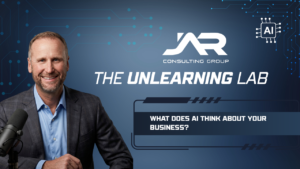

Episode 6: Brand Citations and Zero-Click Discovery

Mike Downer: I am back with Kevin Wosmansky, the President and CEO of JAR Consulting. I am Mike Downer, and I am Kevin’s chief storytelling strategist. Kevin, how are you doing today?

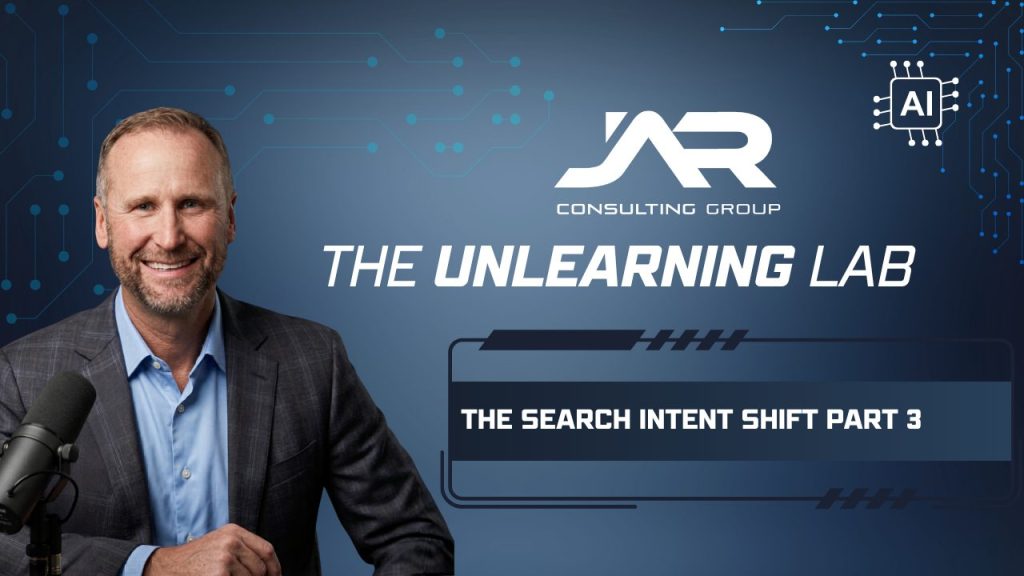
Kevin Wosmansky: Doing good, Mike. Good to be back with you, partner. Once again, back in the saddle. We’re talking about the search internet shift, so we’re back with part three on how to close the gap and win brand citations in 2026.

Mike Downer: A big part of that, when we’re talking about winning brand citations, is this: what are brand citations? What does that even mean?

Kevin Wosmansky: Yeah, I like it. Jump right into it. When we talk about the search intent shift, which is what we’re seeing with so many of our clients, a lot of people are still stuck doing things the old way, all the way back to 2024 and 2025. There’s been an entire shift in search intent.

In our previous few parts, we’ve been trying to break this down into digestible little episodes for people. Specifically now, we’re talking about brand citations.

Mike, in this era of AI-driven search, brand citations are replacing traditional backlinks. If you think about it, in the past, a backlink was the gold standard for digital authority. My website would link to 10 other websites, and the more value and search authority those other websites had, the more authority it gave mine.

The thing about it is, while backlinks are clickable links between websites, a citation is a credible reference to your brand. That is so important. Citations are your brand, your experts, and your research being referenced across the web, with or without links. This is the part where I really like where things are going with AI. I tell people all the time: you can’t black-hat your way into showing up on AI. You can’t cheat your way there.

You can’t really buy ads on it right now, at least not yet. I’m betting that changes at some point, but that’s just being real. The simple fact is that the only way you’re going to become recommended on any of the AI models is for them to say, “Yeah, this guy’s the expert. This guy has all this real information,” or “This business,” or “This gal,” whoever you are.

That’s what it’s doing. It requires the business to go out there and become the expert. Again, you can’t black-hat your way there. You can’t fake it. You just have to do it. So really, to answer your question, Mike, a brand citation occurs when an AI system like Gemini or Perplexity, or a reputable third-party website, references your business as a source of information. In a nutshell, that’s exactly what a brand citation is.

Why Brand Citations Matter

Mike Downer: Okay, so why are brand citations important, and why do they even matter?

Kevin Wosmansky: That’s kind of—see, Mike, you do such a great job of asking the questions people want to know. Why do brand citations matter? I’ll give you a little deeper dive here. Brand citations appear as footnotes, source links, and explicit acknowledgments in an AI response. That signals that the model trusts your data enough to credit it.

The reason brand citations matter is because AI trusts you or your business enough to use your data when answering someone’s question. So why do they matter? They matter because it’s how a business in the new world is going to get found. When a consumer is looking for a service, a product, or a good, they’re going to ask the question. AI is looking at all these different citations, and if it cites you as the expert for that product or source, it’s going to give you as the answer.

Unlike the days of the blue links and showing up in organic searches—which is still happening, and I tell my clients this hasn’t gone away yet, it still matters—SEO still matters. We’re in this transition where I’d say 75% of people are still doing business as usual, but 25% are now just using AI. Every single day, those numbers keep shifting.

Mike Downer: So are you saying that these new AI brand citations are like the new backlinks?

Kevin Wosmansky: I mean, kind of. You could say they kind of are. A backlink is how you establish credibility for your company through your website. A citation is how AI establishes authority in terms of what it thinks about the data you’re producing. Does AI think you’re putting real data out there? If so, it’s going to cite you. So it’s a good analogy, Mike. In some ways, brand citations are kind of like the new backlink, for sure.

Combating Citation Drift

Mike Downer: Explain to me, because I’m sure this is a term that I just learned today and that a lot of people have never even heard about—what is citation drift, and how do you combat that?

Kevin Wosmansky: Say that question one more time for me, Mike.

Mike Downer: Can you explain to me what citation drift is, and how you combat that?

Kevin Wosmansky: Great question. Now we’re getting into the real meat and potatoes of what we’re doing here. When we talk about citation drift, we’re talking about visibility in AI, where answers can be volatile. A brand might appear in one response, but disappear in the next response.

Some of the things we’ve learned and studied as we’ve dug into this show that brands earning a mention—which is a recommendation—and a citation are 40% more likely to resurface consistently in future AI answers. As we talk to a lot of our clients and try to educate people on this—because it’s so new and it’s coming so fast—combating citation drift really means you want your brand to be recommended or mentioned, and you want to be cited. You want AI to say, “That’s a true source of data. That’s real. That’s true.” That’s what they mean when they say you’re combating citation drift.

Zero-Click Discovery

Mike Downer: Very cool. The last thing I wanted to ask you is this: I’ve heard this a couple times. What is zero-click discovery? That’s another thing I’m just now learning about and hearing about. I’m not sure what that is, so if you could explain that to us and how to drive that.

Kevin Wosmansky: So, zero-click discovery—in today’s world, where we’ve all grown up and lived with the internet—we used to do all kinds of things to optimize so we would show up when somebody searched for something, and then they would click on us. That was really important. Again, this is where we have to put our hats on and kind of step into the new world, where so many users are now getting their answers directly from AI. These are summaries without clicking any links.

I gave an example in one of our previous episodes where I was looking to buy tires for my wife’s vehicle. I just asked AI and said, “Hey, here are some things I’m looking at,” and it gave me all kinds of information and options that I hadn’t even searched for. It said, “Oh, you should think of this, this, and this,” and that ultimately led me to change my buying decision and behavior.

So what I’d say, Mike, is that zero-click discovery is when your brand is cited within that summary. You begin to gain what they call narrative control and brand recall, even if the user never visits your website. In my example from a previous episode, I was looking at tires—tires that I didn’t even know existed. That’s funny, because I didn’t even know they existed. I didn’t buy those tires, but now I know they exist.

So that brand that I had never heard of before—when I was looking at two specific tire brands—recommended a third one to me. Here’s the thing: I have another vehicle that might need new tires in another six months. I’ll probably stretch it out, maybe 10 months, because I don’t like to buy tires. But the point of zero-click discovery is that I am now aware of a whole new tire brand that Gemini said I should really consider, and I didn’t even know it existed. Now I do. That specific tire brand company didn’t run a Facebook ad. They didn’t run TV commercials. I didn’t even know they existed, but now I do. That’s another important thing I think business owners need to think about: consumers are going to be changing how they learn about products they’re not even looking for. Good question. Glad you asked that one, Mike.

A Competitive Shift for Business Owners

Mike Downer: Thanks. That’s got to be a shift, because the traditional way of thinking as a business owner—when you did it yourself, or I remember being back in the radio business a long time ago—everything was about, “Oh, we got this many clicks. We got this many click-throughs. Click, click, click, click, click, click.” It sounds like it’s going completely away from that, and you know how to help people make that transition.

Kevin Wosmansky: Yeah, and that’s, you know, Mike, as our business has really evolved—like I said, our customers hire us to help them with their branding and marketing. We do all those different things. But what’s evolving is coming so fast right now, and I tell my clients this: there are going to be winners, and there are going to be losers in business. This is not a situation where everyone gets a trophy or everyone does okay. There are going to be real winners and real losers.

So I think many businesses, just out of survival, need to adapt. They need to start looking at this. When we talk about something as simple as how to win brand citations—guess what? That’s really important. Whatever your brand or business is, you want to get cited by all these AI engines. That means they’re recognizing you and your business as a true, legitimate data source. I think that’s kind of the key takeaway for today.

Mike Downer: Hey, you covered a lot of ground again in a short amount of time. Thanks again for all the great information. We’ll be back. I think we’ve got one more of these in this category, and we’ll see if we can help a few more folks out. Then whatever my customers keep asking me, that’ll become the next category.

Kevin Wosmansky: Thanks.

Mike Downer: One hundred percent. All right, buddy. Thank you so much. You have a great day, Kevin.

Kevin Wosmansky: Have a good one. Bye.

JAR Consulting Group helps businesses implement AI and become the recommendation when customers ask AI for what they need. GEO, AI implementation, and the AI Visibility Stack.

© 2026 JAR Consulting Group. All Rights Reserved. Privacy Policy | Terms of Service