
For years, digital marketing focused on search rankings. Businesses invested in SEO, paid ads, and website design to reach customers through Google. Higher rankings meant more calls, more leads, and more revenue.
Watch Episode 1 of Unlearning Lab: The AI Lead Gen Playbook
Search behavior now shifts. Artificial intelligence guides how people research problems and choose companies. Many consumers skip long lists of links and ask an AI assistant for help. This shift, known as AI customer discovery, changes how businesses earn trust and visibility online. Kevin Wosmansky of JAR Consulting Group described the change during a recent podcast. In his words, the future of lead generation already changed, though many companies still operate under the old model.
The Traditional Search Model Is Fading
For most of the internet era, customers followed a familiar path. A problem appeared, someone opened a browser, and a search began. Search results displayed several companies. The person reviewed websites, checked reviews, and compared options before making a call.
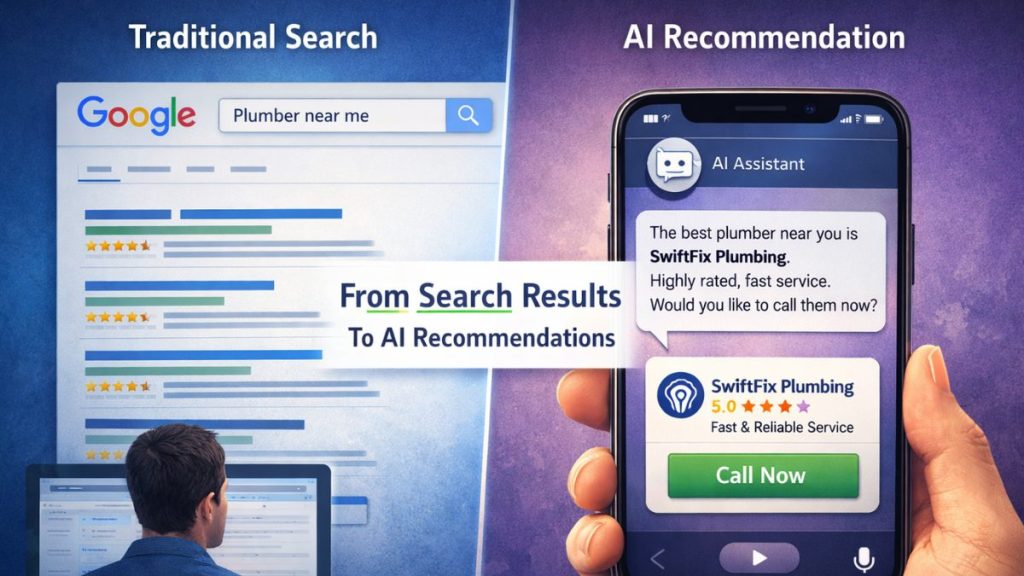
Picture a homeowner with a leaking sink. The common reaction involved opening Google and typing plumber near me. The search results displayed multiple companies. The homeowner reviewed the first few listings and began calling until someone answered.
This process gave several businesses a chance to win the job. Even a company ranked fourth or fifth still held an opportunity to earn the customer.
Artificial intelligence changes this pattern. Instead of scanning a list of providers, people ask an AI assistant for advice. The AI reviews information across the internet and returns a single recommendation. One answer replaces ten search results.
AI Assistants Are Becoming Trusted Advisors
AI tools operate differently from traditional search engines. Search engines display links. AI systems deliver direct answers.
Personalized recommendations replace search results
People interact with AI assistants more often each month. Over time, those systems learn preferences, habits, and expectations.
When someone asks for a service recommendation, the AI reviews signals across the internet. Reviews, expert content, reputation signals, and industry authority influence the response. The system then recommends one business.
During the podcast conversation, Wosmansky shared a simple example. A homeowner asks an AI assistant for help after a sink breaks. The homeowner requests a reliable plumber with strong reviews and fast service. The AI processes the request and recommends a single company. The homeowner places the call. Every other plumber in the area loses the opportunity to compete.
AI favors credibility and expertise
AI systems focus on providing the best answer for the user. To achieve this goal, the systems rely on signals of expertise and credibility. Businesses with strong authority across the internet appear more often in AI responses. Companies with weak authority remain hidden.
This shift requires a new marketing approach.
Authority Replaces Traffic As The Core Marketing Goal
Traditional marketing strategies focused on traffic. Companies chased higher rankings and more website visitors. Traffic still matters. Authority matters more.
AI systems evaluate which companies demonstrate expertise in their field. The more evidence available across the internet, the stronger the chance the AI recommends the business.
Wosmansky explained this concept during the podcast. Businesses must train AI systems to recognize their expertise. Paid advertising alone does not create this recognition. Authority grows through consistent, original content that demonstrates knowledge and experience.
Content Authority Drives AI Recommendations
Businesses seeking AI visibility must rethink content strategy.
Real expertise matters more than mass production
Many companies publish large volumes of generic AI generated content. This approach fails to build authority. AI systems identify patterns of shallow material and assign little trust.
Stronger authority grows through useful content created by experts. Educational articles, research insights, podcasts, videos, and case studies signal experience. These signals spread across the internet. AI models read those signals and associate the company with expertise.
JAR Consulting Group spent years studying this shift. The firm tests strategies, monitors search behavior, and guides clients through the transition. Their approach focuses on building authority across digital channels.
Companies who build authority strengthen visibility within AI recommendations.
A Window Of Opportunity Exists
Many businesses remain unaware of this shift. Marketing teams still chase traditional rankings while AI driven discovery grows behind the scenes. This gap creates opportunity.
Companies who invest in authority today gain an early lead. AI systems begin associating their brand with expertise before competitors react. Over time those businesses appear more often in AI recommendations.
Competitors who wait face a harder climb. JAR Consulting Group helps companies move early by developing authority strategies and expert content aligned with AI search behavior.
The Future Of Customer Acquisition
Customer search behavior enters a new phase. AI assistants guide buyers toward businesses. Instead of reviewing pages of results, people ask one question and receive one recommendation.
The companies appearing in those answers gain the majority of future leads. Authority, expertise, and consistent education drive those recommendations. Businesses who invest in these signals strengthen their position within the emerging AI customer discovery ecosystem.
Want a deeper understanding of how AI changes customer search behavior and business development?
Kevin Wosmansky and the team at JAR Consulting Group discuss this shift in detail during their podcast conversation. The discussion explains how AI assistants influence purchasing decisions, why authority matters more than rankings, and what businesses must do to remain visible.
Watch the full episode on YouTube to hear the full conversation and learn how forward thinking companies prepare for this shift in customer behavior.
FAQs
How does AI change how customers search for businesses?
AI assistants provide direct answers instead of lists of links. Users ask for a service recommendation and the system suggests a provider based on available information.
Will search engines disappear?
Search engines remain important sources of information. AI tools summarize and interpret those sources to deliver direct answers.
Why does authority influence AI recommendations?
AI systems rely on signals of trust and expertise across the internet. Companies with stronger authority appear more often in responses.
Do paid ads influence AI recommendations?
Current AI systems rely more heavily on credibility signals than advertising placement.
What type of content builds authority?
Educational articles, research insights, podcasts, and case studies demonstrate expertise.
How should businesses prepare for AI driven search?
Companies should focus on publishing expert content, strengthening reputation signals, and building authority across multiple platforms.
Why do early adopters gain an advantage?
AI systems learn from available information. Businesses building authority earlier appear more often in recommendations.
Where should business owners learn more about this shift?
Industry podcasts, marketing research, and agencies focused on AI search strategies provide guidance for businesses adapting to these changes.