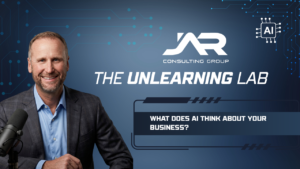

Business development has always been tough. Cold calls, endless emails, and the constant battle to get past gatekeepers have defined B2B sales for decades. But something fundamental is changing. The traditional gatekeeper — the receptionist, assistant, or first-line filter — is being replaced by something entirely different: AI-driven decision-making.
Watch the latest episode of Unlearning Lab: The AI Lead Gen Playbook
In a recent conversation between Mike Downer and Kevin Wosmansky, they explored how artificial intelligence is transforming the way businesses connect, sell, and build relationships. The result is a seismic shift in how business development works. This shift is forcing businesses to rethink outreach, messaging, and AI implementation earlier than ever before.
The Traditional Gatekeeper Model
For years, business development relied on getting past a human gatekeeper. Salespeople built relationships with front-desk staff, sent gifts, made repeat calls, and tried to earn trust just to reach a decision-maker. This model depended on humans controlling access. That is no longer guaranteed. Once access was granted, the real selling could begin. Today, that gate is being digitized.
The Rise of the AI Gatekeeper
Today, the first filter is increasingly artificial intelligence. Before a salesperson ever reaches a human, AI tools are screening emails, summarizing outreach, filtering spam, and prioritizing vendors. Decision-makers are training AI assistants to reject irrelevant pitches and schedule only qualified conversations. This means salespeople are no longer pitching to a receptionist; they are pitching to an algorithm.
The End of “Spray and Pray” Sales
The traditional method of making 100 calls a day or sending mass emails is rapidly losing effectiveness. AI-powered inboxes detect generic outreach and filter it out before it ever reaches a human. AI is forcing sales to evolve from volume to precision. To succeed, business development must become more personalized, more relevant, and more relationship-focused.
How Businesses Should Adapt Today
Preparing for this new sales reality requires a shift in strategy. Companies must move beyond simple visibility tactics and focus on building genuine authority.
Optimize Messaging for AI Interpretation
Your subject lines must be relevant and your value proposition must be immediate. AI agents learn the priorities of decision-makers; if your messaging isn’t clear, the AI gatekeeper simply blocks you.
Improve Digital Credibility and Brand Authority
Your brand presence must be consistent online. AI systems evaluate enormous volumes of data to determine credibility. Businesses must demonstrate real expertise that AI systems recognize and trust.
Focus on Value-First Communication
The goal is no longer just “access”—it is relevance. Highly targeted outreach that provides immediate value is the only way to bypass modern digital filters.
Embrace AI Tools Internally
Within the next 6 to 24 months, widespread adoption of AI assistants is expected. Businesses that use AI tools internally to understand how filtering works will have a major competitive advantage.
The 6–24 Month Adoption Window
We are still early in adoption, but the pace is accelerating. Soon, decision-makers will use paid AI assistants to automate vendor screening and research. Companies that understand how to communicate with AI, and through AI, will win the next era of sales.
FAQs: AI and the New Business Development
What is an AI gatekeeper?
An AI gatekeeper is an artificial intelligence system that filters emails and messages before they reach a human. These systems prioritize relevance and block generic sales pitches.
Is cold outreach dead?
No, but generic cold outreach is. Outreach must now be highly personalized and valuable to pass AI filtering systems.
How should salespeople adapt?
Focus on relevance, personalization, and strong digital credibility. Messaging must be designed to convince an algorithm before it ever reaches a human.
Does this make business development harder?
It makes it different. Those who adapt will find it easier to reach qualified prospects, while those using outdated “volume-based” tactics will struggle.
What should businesses do right now?
Start improving outreach quality, refine your brand authority online, and begin using AI tools internally to understand the mechanics of AI-based filtering.
AI Is Becoming the New Decision-Maker
Consumers are already building relationships with AI tools like ChatGPT, Gemini, Perplexity, Grok, and Microsoft Copilot. What began as experimental tools for writing emails or generating images is quickly evolving into something much more influential. These AI systems are becoming personal decision assistants. They can interpret complex questions, analyze massive amounts of information, and provide recommendations tailored to the user’s preferences. Instead of typing a search query and browsing results, a homeowner might ask an AI assistant a much more conversational question. “Hey, my sink just burst and water is everywhere. I need a plumber who can come quickly, has great reviews, and won’t overcharge me. Who should I call?” During the podcast conversation, Kevin Wosmansky describes this shift clearly: “AI is going to tell you who to call. And you’re going to call that person.” This subtle change dramatically alters the competitive landscape for local businesses. Instead of appearing in a list of options, companies must now compete to become the single recommendation.
The Real Battle: Becoming the Recommended Business
When AI tools begin filtering choices for consumers, the competitive environment changes completely. Businesses are no longer battling for visibility on a page of search results. Instead, they are competing to become the one business the AI suggests. AI systems evaluate enormous volumes of online data to determine which businesses deserve that recommendation. They consider signals such as credibility, expertise, reputation, and overall authority within a specific field. Paid advertising alone will not guarantee success in this environment. Kevin emphasizes this idea directly during the discussion: “You can’t cheat your way into having AI recommend your business.” That statement reflects a major shift in how businesses must approach marketing. Instead of simply buying visibility, companies must demonstrate real expertise that AI systems recognize and trust.
What Local Businesses Should Do Today
Preparing for an AI-driven discovery environment requires a shift in strategy. Companies must move beyond simple visibility tactics and focus on building genuine authority in their niche. Below are several practical steps businesses can take to begin adapting right now.
Become a Recognized Expert
Businesses must demonstrate expertise within their industry rather than simply advertising their services. Educational content that explains common problems, solutions, and industry trends can help establish credibility with both customers and AI systems. Sharing knowledge builds trust over time. When companies consistently provide helpful insights, they begin to stand out as experts rather than just another service provider.
Invest in Original Content
AI models are increasingly capable of identifying low-value or repetitive content. Simply generating hundreds of automated blog posts will not build authority or trust. Businesses should focus on producing original insights that reflect real experience. Podcasts, videos, industry commentary, and case studies often carry more weight because they reveal authentic expertise.
Build a Trusted Brand Presence
Reputation signals play a significant role in how AI systems evaluate businesses. Positive reviews, media mentions, social proof, and industry recognition all contribute to a company’s credibility. A strong brand presence across multiple platforms reinforces trust and helps AI models verify that the business is legitimate and respected.
Embrace AI Tools Internally
AI is not only transforming how customers discover businesses. It is also reshaping how companies operate behind the scenes. Kevin points out that properly trained AI systems can dramatically increase productivity: “If you train your AI properly, it’s going to 100x your output.” Businesses that integrate AI into their workflows will move faster, respond more effectively to customers, and ultimately outperform slower competitors.
Watch the Full Podcast Episode
The full conversation between Mike Downer and Kevin Wosmansky dives even deeper into the strategies businesses need to prepare for the future. If you want to hear the full discussion and gain additional insights into how companies can stay ahead of this shift, be sure to watch the complete episode on YouTube. ▶ Watch the full podcast to learn how businesses can adapt before the next wave of digital transformation arrives.
FAQs About AI and Local Business Discovery
How will AI change how customers find local businesses?
AI assistants will analyze data across the internet and recommend specific businesses directly. Instead of browsing multiple search results, users will increasingly trust AI suggestions.
Will Google search disappear?
No. Google will likely remain a major platform. However, AI-powered assistants and search tools will increasingly influence how customers make decisions.
What is the biggest factor in getting recommended by AI?
Authority and trust. Businesses that consistently publish helpful, expert content are more likely to be recognized as reliable sources.
Can businesses pay AI platforms to recommend them?
Currently, AI systems prioritize credibility and relevance rather than advertising. While monetization models may appear in the future, authority signals will remain essential.
Is traditional SEO still important?
Yes. SEO still plays a major role in discoverability. However, businesses must expand beyond rankings and focus on expertise and content authority.
What types of content help businesses become authorities?
Podcasts, educational articles, case studies, and video explainers are excellent ways to demonstrate expertise and build trust.
How quickly will AI change local search?
The shift is already happening. AI tools are evolving rapidly, and consumer adoption is accelerating.
What should businesses do first to prepare?
Start building authority today. Publish helpful insights, demonstrate expertise, and position your brand as a trusted industry voice in the evolving world of AI local search.