Key Takeaways
- The era of short keyword SEO is ending
- AI search is conversational and answer-driven
- Businesses must target high-intent questions instead of keywords
- AI systems synthesize answers from multiple sources
- Brand citations depend on expertise and relevance
- The biggest shift required is a change in mindset
- Companies that adapt now gain a competitive advantage
- Waiting to pivot may result in lost visibility
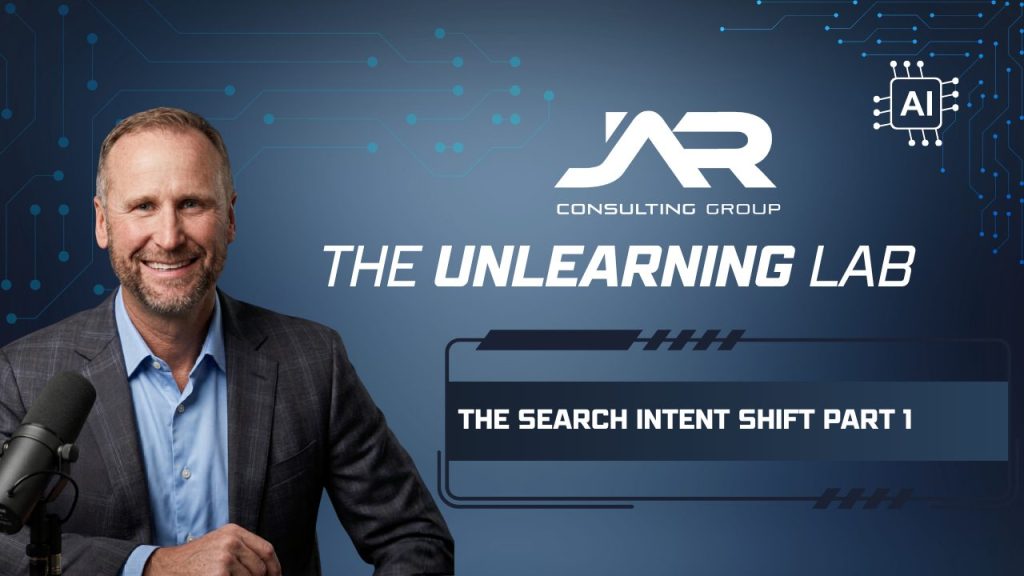
Search is changing faster than ever. Traditional SEO strategies built around short keywords are being replaced by conversational, AI-driven discovery driven by evolving AI search intent. In a recent discussion, Mike Downer sat down with JAR Consulting President and CEO Kevin Wosmansky to talk about how businesses can close the gap and win brand citations in 2026 and beyond.
Here’s what business owners need to understand — and how to adapt.
The Death of the Two-Word Keyword
For decades, search behavior revolved around short phrases like “plumber near me” or “plumbers Iowa.” Users adapted their language to fit search engines that struggled with context.
That model is quickly disappearing. Today, users interact with AI in full conversations. Instead of typing a short keyword, they describe their situation, preferences, urgency, location, and expectations. AI systems then synthesize answers from multiple sources and present a single recommendation.
This shift changes everything about how businesses need to think about visibility.
From Links to Answers: How AI Search Works Now
Modern AI search tools don’t just return a list of links. They generate a single, coherent answer by synthesizing information from multiple sources. This means businesses are no longer competing just for rankings — they’re competing to become the answer.
The more specific the user’s question becomes, the more important expertise, authority, and context become in determining which brands are cited by AI systems.
The New Strategy: Target Questions, Not Keywords
According to Kevin Wosmansky, businesses must stop targeting vague, high-volume keywords and instead focus on high-intent questions.
This includes:
- Specific customer scenarios
- Problem-based queries
- Comparison questions
- Location-aware requests
- Urgency-driven searches
- Trust and credibility questions
AI models prioritize content that directly answers complex questions. Businesses that structure their content this way dramatically increase their chances of being cited.
The Mental Shift Businesses Must Make
The biggest challenge isn’t technology — it’s mindset. Businesses must begin thinking differently about content and visibility. Instead of asking, “What keywords should we rank for?” they should ask:
- What questions are our customers asking?
- What problems are they trying to solve?
- What context do they include in AI prompts?
- What answer would AI want to provide?
The goal is simple: become the best possible answer.
When Should Businesses Start?
The timeline is immediate. Businesses that wait risk losing visibility as AI-generated answers replace traditional search results. Organizations that adapt now can get ahead of competitors and establish authority before the shift fully matures.
The new AI-driven search landscape is not coming — it’s already here.
Frequently Asked Questions
What are brand citations in AI search?
Brand citations occur when AI systems reference your business as part of a generated answer. Instead of showing a list of links, AI tools may recommend specific companies directly.
Why are keywords becoming less important?
Users now ask full questions instead of typing short phrases. AI systems interpret context, intent, and nuance, reducing reliance on traditional keyword matching.
What type of content performs best in AI search?
Content that answers specific, high-intent questions performs best. This includes problem-solving content, comparisons, guides, and expert explanations.
How do businesses become the answer?
By creating content that directly addresses real customer scenarios and provides clear, authoritative responses. The more helpful and contextual the content, the more likely AI will cite it.
Is traditional SEO still relevant?
Yes, but it’s evolving. Technical SEO still matters, but success increasingly depends on semantic relevance, authority, and question-based content.
When should businesses adapt to AI search?
Immediately. The shift is already happening, and early adopters gain a significant advantage in visibility and brand citations.