1 min read

The New Rules of AI Search Optimization in 2026

Key Takeaways

  • AI search is replacing traditional keyword-based discovery
  • Consistency across platforms is critical for visibility
  • Semantic consistency strengthens your brand’s entity signal
  • AI relies on patterns, not human intuition, to understand brands
  • Fragmented messaging leads to weaker AI recognition
  • Strong, unified branding increases your chances of being cited by AI

The way people discover businesses online is rapidly evolving, and AI search optimization is now at the center of that shift. Traditional SEO tactics are no longer enough. Instead, brands must adapt to how AI systems interpret, connect, and recommend information. The insights below are grounded in real-world discussions on search intent, AI citations, and what it takes to become a trusted source in the age of AI.

From Keywords to Conversations

Search behavior has fundamentally changed. Users are moving away from short keyword queries and toward full conversations with AI systems. Instead of typing “roofing company near me,” users now ask detailed, contextual questions.

As Kevin Wosmansky of JAR Consulting Group explains in The Unlearning Lab: AI Lead Gen Playbook podcast, “there is a giant gap between two keywords or three keywords and a prompt, or a conversation that a customer is going to have with an agentic model.” This shift creates a disconnect between traditional SEO strategies and how people now search.

Businesses that fail to adapt risk becoming invisible in AI-generated recommendations.

Why AI Struggles to Understand Your Brand

One of the biggest challenges in AI-driven search is that AI doesn’t understand brands the way humans do.

Kevin Wosmansky puts it clearly: “AI search engines don’t really comprehend brands. They don’t understand brands the way we people do… AI looks for stable patterns.”

If your business is described differently across platforms—such as your website, social media, or third-party mentions—AI may interpret those as separate entities. This creates what he calls “interpretive friction,” where your brand is seen as “three weak entities instead of one powerhouse.”

The Power of Semantic Consistency

To overcome this, businesses must focus on semantic consistency—using clear, uniform language across all digital channels.

Kevin defines it as “the practice of using coherent, uniform, expert-led language across all your digital platforms.”

This includes:

  • Consistent descriptions of your services
  • Unified brand messaging
  • Standardized terminology across platforms

When done correctly, this builds a strong “entity signal” that helps AI recognize your business as a single, trustworthy source.

Building a Strong Entity Signal

An entity signal is essentially your brand’s consistent voice across the internet.

As Kevin explains, “your entity signal is your consistent, coherent voice.” By aligning how you describe your business, products, and services everywhere online, you reduce confusion for AI systems.

He gives a practical example: using multiple variations like “SEO,” “Google Maps,” or “backlinking” may make sense to humans—but for AI, “the problem is AI doesn’t understand that.”

Standardizing your language reduces ambiguity and increases trust.

AI as a Librarian vs. a Brain

A helpful way to understand this shift is through analogy.

Kevin explains: “Traditional search used to act like a librarian matching keywords to book titles. AI search… acts more like a brain, connecting nodes, entities, and relationships.”

This means your content must not only exist—it must connect logically across platforms so AI can map it correctly within its knowledge graph.

Why Brand Citations Matter More Than Ever

In the AI search era, being recommended depends on trust and clarity.

Kevin emphasizes that success comes when “AI is 100% confident that it’s you,” because that’s “when the citations really start to happen.”

AI systems look for consistent signals before citing a brand. If your messaging is fragmented, your chances of being recommended drop significantly.

Preparing for the Future of Search

The shift isn’t coming—it’s already here.

Kevin shares a real-world example: clients are now hearing, “Well, I found you on ChatGPT.” Just months ago, that wasn’t happening.

He makes it clear: “we’re just trying to help prepare… not for what’s coming, but for what already came.”

To stay competitive, companies must:

  • Align messaging across all channels
  • Reduce inconsistencies in branding
  • Focus on becoming a recognized authority in their niche

Technical strategies like schema markup can further help AI understand your content, but the foundation is always consistency.

The Future Belongs to Consistent Brands

The future of search belongs to businesses that can clearly communicate who they are across every digital touchpoint.

As Kevin summarizes, “we’re engineering the signals that AI systems trust.” That is the core of modern visibility.

Mastering AI search optimization is no longer optional—it’s essential for staying visible in a rapidly changing digital landscape.

FAQs

What is semantic consistency?

Semantic consistency is the practice of using uniform language and messaging across all platforms to help AI recognize your brand as a single entity.

Why does AI get confused about brands?

AI relies on patterns and signals. If your brand is described differently across platforms, it may interpret those as separate entities.

How can I improve my visibility in AI search?

Focus on consistent messaging, clear positioning, and building authority across multiple digital channels.

Is traditional SEO still relevant?

Yes, but its importance is decreasing as conversational AI search becomes more dominant.

What is an entity signal?

An entity signal is the consistent representation of your brand across digital platforms that helps AI identify and trust your business.
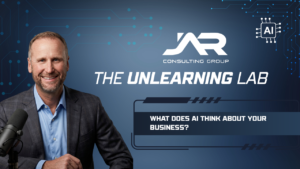

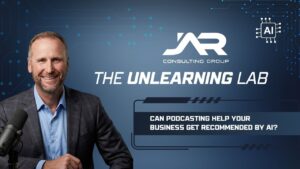
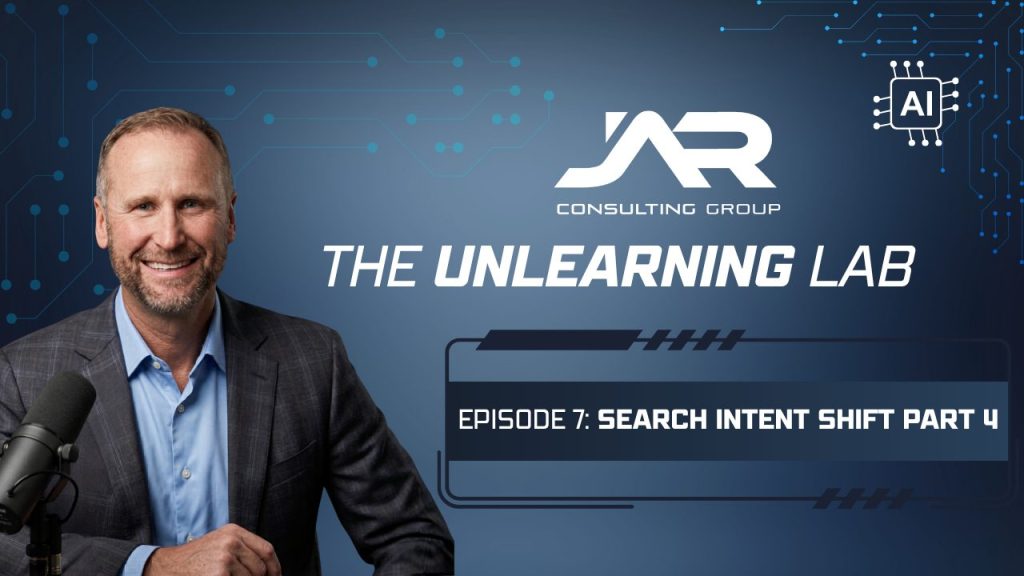
Mike Downer: Hey everybody, Mike Downer, Chief Storytelling Strategist with JAR Consulting Group. One of these days I’m going to be able to say that, Kevin. He is my boss. This is Kevin Wosmansky, the President and CEO of JAR Consulting Group.

Kevin Wosmansky: Mike, do we need to shorten that title for you there, buddy?

Mike Downer: Yeah, I think it should just be “loudmouth talker.” I mean, it’d be way easier to say. I’ve got “storytelling strategist.”

Kevin Wosmansky: There you go.

Mike Downer: A lot of syllables. All right, buddy. So, we’re getting back into this here. This is our fourth episode on the search intent shift and how to close the gap and win brand citations in 2026, part four. So, Kevin, we’ve talked about how critical it is to get cited by AI as a source of truth, but I have a couple of questions here wrapped into one. If our brand is mentioned on Reddit, that’s one thing, and then it’s listed on a website, that’s another thing, and then described differently on our LinkedIn bio, how does an AI actually know all these citations belong to the same JAR Consulting Group entity? And also, is it possible for AI to get confused about who we are, even if we’re being talked about everywhere?

Kevin Wosmansky: You know, Mike, I would say that could be the multi-million-dollar—no, scratch that—I’d say that might be the billion-dollar question for 2026. AI search engines don’t really comprehend brands. They don’t understand brands the way we people do. What we need to realize is that AI looks for stable patterns. Think about this: if your brand name, your company mission, and your expert voice all vary across Reddit, LinkedIn, or maybe the blog section of your website, what’s happening is you’re creating what they call interpretive friction. What that means is AI starts to see you as three weak entities instead of one powerhouse.

Kevin Wosmansky: So this takes us into a really important phrase we’re going to talk about, and that’s semantic consistency. What that is, again, in real fancy speak, is how we engineer the signals so that every mention, no matter where it happens, maps back to one single trusted node or source, which is the AI’s knowledge graph. When AI is 100% confident that it’s you, that’s when the citations really start to happen.

Mike Downer: So how does a company gain semantic consistency? How do they engineer that? How do you get AI to even trust that?

Kevin Wosmansky: Yeah, that’s through a lot of work. It doesn’t happen overnight, I’ll tell you that. Some brands, when you take a look at, let’s say, Coca-Cola, just using them as an example—a multi-billion-dollar brand recognized worldwide—they already have it. But they’ve also spent gobs and gobs of money to do it. Most small to mid-sized businesses are pretty fragmented.

Kevin Wosmansky: So when we talk about semantic consistency, we need to think about it as the practice of using coherent, uniform, expert-led language across all your digital platforms. What this does is reinforce your brand or your company’s entity signal.

Mike Downer: Okay, I’m introducing a lot of new terminology here. So, what’s an entity signal?

Kevin Wosmansky: Well, your entity signal is your consistent, coherent voice. By aligning the terminology that you use about your business, your product, and your service, you align that terminology across your website, your social platforms, and your podcasts. You need to do this so you reduce interpretive friction for AI models.

You know, in my business, we’ll have a service that, in the past, we would say is SEO. Well, SEO could refer to Google local SEO, Google Maps, search engine optimization, or backlinking. If I’m using four different terms, humans understand those are all really the same thing. The problem is AI doesn’t understand that. So when you are using one entity, one brand signal, and one consolidated voice, this starts to build statistical confidence for AI to recognize you as a canonical source of truth.

With AI, everything goes back to what’s a source of truth. This leads to much higher citation rates, and you start showing up when people are asking questions.

Mike Downer: So, real quick question for you. Looking at the past and the inconsistencies that people had that didn’t seem to matter as much back in the day, with AI they matter a lot more. Is there a way that JAR Consulting Group can help sort that out and start building consistency with a company rather than them trying to figure all this out on their own? Because it sounds very—

Kevin Wosmansky: Yeah, it is. And that’s what we do for a lot of our clients. We help them navigate this web and do all of this. So yes, absolutely. Your brand consistency, as we move into this new world, and what we’re talking about right here, Mike, with semantic consistency—I mean, again, that’s just a fancy way of saying you need to make sure that everything you put out there is consistent and coherent.

If you’re a roofing company, you need to use the same terminology on your social media as you use on your website, and as you use if you’re being interviewed by the local news station. You need to use the same terminology for what you do and who you are. That is what we help businesses with. We help them across the whole digital spectrum.

Kevin Wosmansky: Let me give you an example here.

Mike Downer: I was just going to ask, do you have an example of a client who you’ve kind of helped sort this whole mess out?

Kevin Wosmansky: Let me give it to you in a little bit different scenario here. I want you to think about AI as a librarian versus the AI brain, or traditional search. Traditional search is the brain; AI is the librarian.

Traditional search used to act like a librarian matching keywords to book titles. AI search in 2026 acts more like a brain, connecting nodes, entities, and relationships. So the citation trigger in this is what you’re seeing where the librarian is basically matching a keyword to a book title, while AI is that brain. Inside that library, it’s connecting the book and the card catalog, and it’s connecting the other four books that are part of a series or come after the first book. It’s connecting all of it together.

So I use that as kind of a convoluted example, Mike, to explain that a business in today’s world has to be able to speak with one brand voice about their services, their mission, and their topics—everything that they do—because what AI is doing is trying to connect all these different signals.

Kevin Wosmansky: Just in our world, we do what we call generative engine optimization, or GEO. Our service and our business are called AI Search Engine Authority. What that means is when we talk to our clients about how we help them, we say, “Listen, you need to become the search engine authority, and to do that, you have to become the expert.” So now we have to take your website, all of your social media, your interviews, and all these other things, and make sure it is very consistent. Semantic consistency, right?

Mike Downer: So, I think I’m catching on.

Kevin Wosmansky: Yeah, we’re engineering the signals that AI systems trust. That’s really what it comes down to.

Mike Downer: So I think I’m catching on.

Kevin Wosmansky: Yeah, that’s really what it comes down to. There’s a lot of new terminology I’m throwing out here at you, but the thing about it is this is how things are changing. This terminology matters.

Mike Downer: You’re doing a good job of keeping it simple, where even stupid guys like me can understand it. So I appreciate it.

Kevin Wosmansky: I appreciate that.

Mike Downer: All right, Kevin. So I think that wraps up our little four-part series on this. I’m just excited to see what your customers want to know about next and what you’re getting hit up with at JAR Consulting Group.

Kevin Wosmansky: Well, like I said, Mike, our whole goal is we’re just trying to help prepare all of our clients and customers not for what’s coming, but for what already came. I think a lot of people have been caught by surprise by how fast things are changing.

I just had a client of mine tell me that he had two customers call him, and he asked them, “How did you find out about us?” And they both said, “Well, I found you on ChatGPT.” When I’m starting to hear this every day—three or four months ago, I talked to my clients and they were like, “Well, I would never hear this.” It’s here.

What we’re doing is trying to help prepare all of our clients, and it starts with trying to educate them. We’re kind of closing out this little series that you and I came up with because this is what people are asking so many questions about—how search has shifted. People really need to understand that, like we said, the traditional two- to three-keyword search is still being used, and it still matters today, but it’s going to matter less and less every single day, every single month, for the rest of this year.

People need to understand that there is a giant gap between two keywords or three keywords and a prompt, or a conversation that a customer is going to have with an agentic model.

People always ask me, “How do I get the AIs to recommend me?” Well, guess what? Your brand must be cited, it must be reputable, and AI must be able to understand that all of the signals you put out are consistent, so that AI is confident enough to recommend you.

So we have to work with AI. We have to make sure it understands. There’s a lot of technical stuff. We haven’t even talked about schema markup, and that’s a whole other conversation. But that is just putting code on your website so AI can read it. Really, that’s all it is. Again, that’ll be a whole other conversation.

Mike Downer: So you’ve done a good job of explaining the foundation of where things are going. I know we still have a whole skyscraper to build, but I think you’ve laid a good foundation of where to start, how to start, why to start, and why it’s important.

Kevin Wosmansky: I appreciate that, Mike. Like I said, it’s a whole new world we’re in, and we’re just trying to help educate people. That’s the whole purpose of this.

Mike Downer: Sounds good. I think we’re all learning every day, and you’re just learning it a little faster than the rest of us. You’re doing a great job.

Kevin Wosmansky: I appreciate that, Mike. I’ll see you next week, partner. Have a good one.

Mike Downer: Sounds good.

“`
JAR Consulting Group helps businesses implement AI and become the recommendation when customers ask AI for what they need. GEO, AI implementation, and the AI Visibility Stack.

© 2026 JAR Consulting Group. All Rights Reserved. Privacy Policy | Terms of Service