
Key Takeaways
- Yes, you absolutely need a professional website in 2026.
- AI uses your website as the primary source of business information.
- Social media alone is not enough for visibility or credibility.
- Technical elements (speed, SEO, structure) directly impact AI discovery.
- Original, high-quality content is critical for being recommended.
- Not having a website leads to lost leads and invisibility in AI tools.
In today’s rapidly evolving digital landscape, one question keeps coming up for business owners: do you still need a professional website? With AI tools everywhere and social media dominating attention, it’s easy to assume the answer might be no.
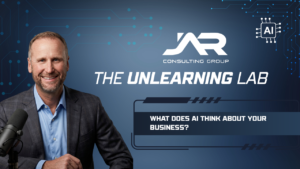
But as Kevin Wosmansky of JAR Consulting Group puts it plainly in an episode of The Unlearning Lab: AI Lead Gen Playbook: “Do you need a professional website in 2026? Absolutely.”
What’s changed isn’t the need for a website—it’s why it matters. We’re now operating in the era of generative engine visibility for small business, where AI tools—not just people—are deciding who gets discovered.
The Website Is Still the Foundation
A common misconception is that social media can replace a website. According to Kevin, that thinking is outdated. “The number one reason is that artificial intelligence is using your website as the front door to your business.”
AI systems don’t just scroll Instagram or Facebook—they crawl websites for structured, reliable information. If you don’t have a website, you’re not just harder to find—you may not exist at all in AI-driven results.
Your Website Is Your 24/7 Digital Storefront
You’ve probably heard the phrase before, but it means more today than ever. Kevin explains it this way: your website is your central hub for marketing, lead generation, and discoverability. It’s no longer just a digital brochure—it’s your engine for growth.
“It used to be like a Yellow Pages listing. Now… it’s your marketing engine. It’s where leads come from. And with AI, it’s how your business gets discovered.”
Why Social Media Alone Falls Short
Social media is powerful—but it’s incomplete. AI systems are now evaluating deeper signals that only websites provide. Kevin highlights critical factors like:
- Site speed and security.
- SEO structure and Schema markup.
- Accessibility and site architecture.
“These are backend elements users don’t see, but AI does—and they make a big difference.” Without these elements, your business lacks the signals AI needs to confidently recommend you.
AI Is Reshaping How Customers Find You
One of the biggest shifts is how discovery happens. AI models are built to answer questions. When someone asks about your industry, those systems look for the best, most authoritative answers—and those answers usually come from websites.
Kevin emphasizes that your website should act as an information ecosystem, not just a static page. “AI looks for original, organic, authoritative content.”
And here’s the catch: if your content is generic or overly AI-generated, it can actually hurt your visibility. “If you rely on AI-generated blog posts, that’s a mistake—AI can detect that and may ignore you.”
Credibility Lives (or Dies) on Your Website
Even before AI, your website played a huge role in trust. “75% of consumers judge credibility based on website design alone.” That means your design, structure, and usability directly influence whether someone chooses to trust your business. In a world where AI is also evaluating credibility, that impact becomes even more important.
Mobile Experience Is No Longer Optional
Another critical factor is mobile performance. “Over 65% of all website traffic is now mobile, and Google uses mobile-first indexing exclusively.” If your site doesn’t work well on mobile, you’re not just frustrating users—you’re actively hurting your visibility in search and AI recommendations.
The Real Cost of Skipping a Website
Many business owners hesitate because of cost or uncertainty. But Kevin flips that perspective. “The true cost of not having a website is lost leads, reduced credibility, and invisibility to AI assistants.”
That last point is the real game changer. As AI tools become the primary way people search and decide, not having a website means being left out entirely.
Breaking the Biggest Myths
“It costs tens of thousands of dollars.”
It doesn’t have to. There are scalable options for every stage of business.
“It won’t make money.”
A properly built website is a lead-generation tool, not just an expense.
“No one will find it.”
“No one will find it… unless you build one.”
Frequently Asked Questions
Do I really need a website if I already have social media?
Yes. Social media supports your brand, but your website is what AI systems rely on to understand and recommend your business.
How does AI actually use my website?
AI crawls your site for structured data, content, and authority signals to decide whether your business is relevant to a user’s question.
What kind of content should I put on my website?
Original, helpful, and experience-based content performs best. Avoid relying entirely on generic AI-generated posts.
What happens if I don’t update my website?
“If your site isn’t updated, you risk becoming invisible to AI.”
Is a website really worth the investment?
Yes. The bigger risk isn’t spending money—it’s missing out on leads and visibility without one.
The Bottom Line: If AI Can’t Find You, You Don’t Exist
In 2026, your website is no longer optional—it’s the foundation of your visibility, credibility, and growth. As Kevin Wosmansky put it best: if you want tools like ChatGPT or Claude to know you exist, you need a website. And if you want to stay competitive moving forward, you need to think beyond just having a site—you need to build for generative engine visibility for small business.